
| Takeaway | Detail |
|---|---|
| $45 premium requires 3+ nights with 2+ pool sessions or a primary trip purpose. | The premium is only worth paying under those exact conditions, not for casual pool use. |
| Occupancy gain is not universal. | Amenities increase occupancy only when they define the brand (boutique or luxury hotels) or perfectly match niche demand. |
| Indoor pool space can cost $150 to $300 per gross square foot to build. | Premium retail tenant improvement costs fall between $150 to $300 per gross square foot, within the broader $40 to $480 range. |
| Divide the premium by your planned pool sessions. | Before paying, verify the pool's operating hours, temperature, and access policy directly with the property, then divide the total premium by your planned pool sessions. |
This guide breaks down when a $45 NYC indoor pool premium can justify itself in 2026.
It focuses on strict usage thresholds and the narrow conditions that can drive occupancy gain.
How the $45 pool premium actually works
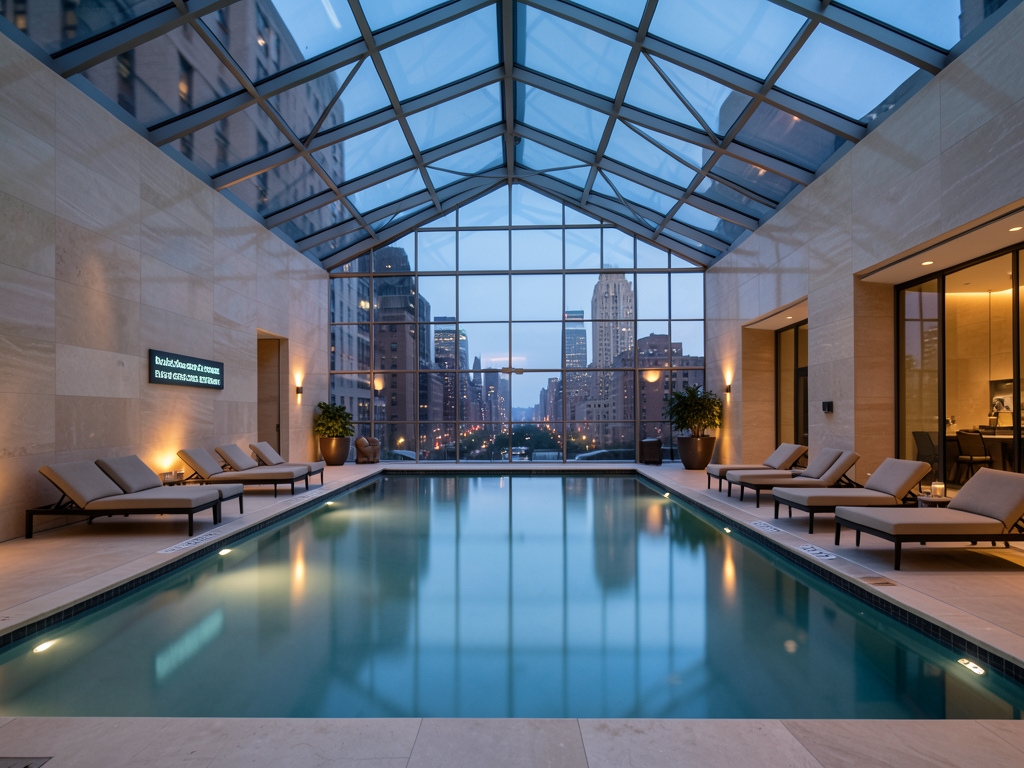
The $45 premium is the nightly rate gap between a room category that includes indoor-pool access and one that does not at the same NYC property. It is a rate differential, not a resort fee or add-on charge: you are choosing a different room category, not paying a separate fee at checkout. That distinction matters because the premium is priced into the nightly rate and may interact with taxes, loyalty earning, corporate rates, or cancellation terms in ways a flat fee would not.
Because the premium is embedded in the room rate, it is charged for every night of the stay rather than for each pool visit. The practical question is whether the pool-inclusive category is worth the nightly gap for your own use, not whether the hotel can point to a pool on its amenity list. Before comparing categories, confirm that the only meaningful difference is pool access rather than view, floor, breakfast, or other inclusions.
Per ispaexpress.com, amenities influence bookings only when they define the brand, as in boutique or luxury hotels, or when they perfectly match niche demand. Applied to this premium, that means the pool is more likely to justify the rate gap where the indoor pool is a brand-defining feature or serves a clearly defined guest segment. At a property where the pool is a standard amenity rather than part of the hotel's identity, the same $45 gap is more likely to function as a category upsell whose value depends on your planned sessions.
Per buildingengines.com, recent data reveals a striking correlation between high-quality amenities and increased tenant satisfaction, ultimately leading to improved commercial real estate occupancy rates. That observation supports the general idea that amenity quality can matter to occupancy, but it is reported for commercial real estate rather than as a hotel-specific measurement of indoor-pool demand. It should be used as context, not as proof that a particular NYC hotel pool will create enough demand to make the premium automatic. Before relying on it, verify the pool's actual operating hours, temperature, and access policy directly with the property.
Before paying the premium, verify the pool's actual operating hours, temperature, and access policy directly with the property, then divide the total premium by your planned pool sessions. Also ask whether the pool-inclusive category differs only by pool access or bundles other terms that change the comparison. The premium is justified only when the pool is central to the trip or the stay is long enough and pool use frequent enough to make the nightly gap reasonable on a per-session basis.
What the evidence actually shows
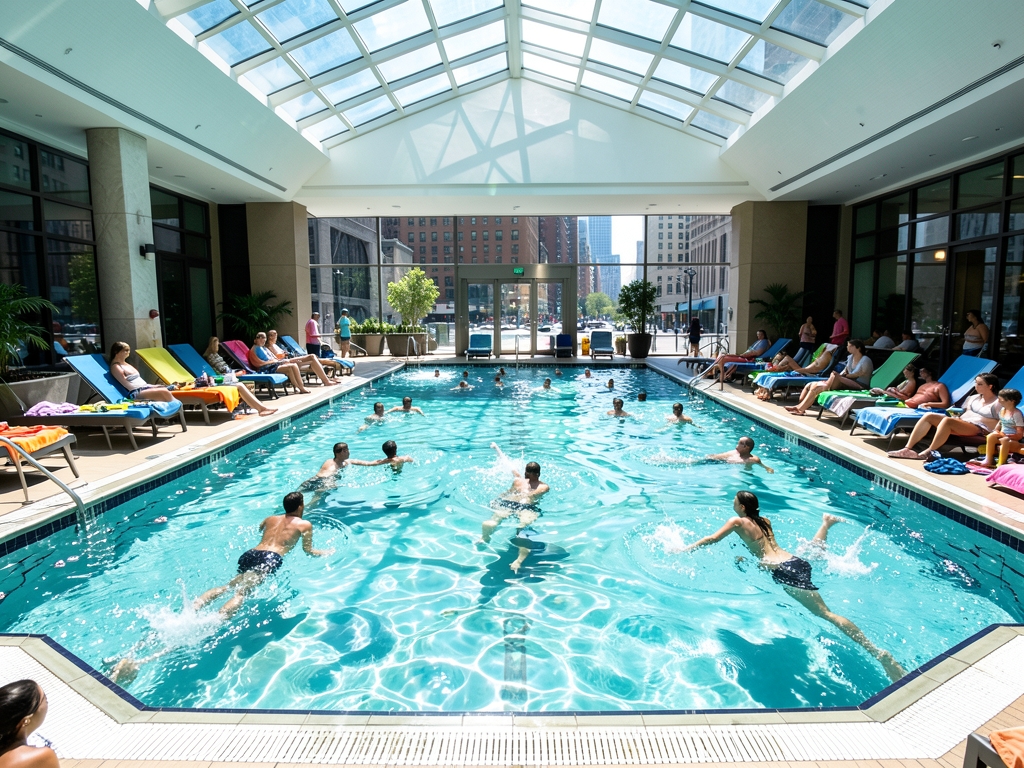
According to botshot.ai's 12 effective strategies to increase hotel occupancy, the pool premium is only one lever among many, not a standalone occupancy driver. This placement within a larger list of strategies shows that hotels have other ways to fill rooms, so an indoor pool cannot be assumed to carry that weight on its own.
That limited role is further narrowed by ispaexpress.com, which states that amenities increase occupancy only in two cases: when they define the brand (boutique or luxury hotels), or when they perfectly match niche demand. These are exceptions, not defaults. For most NYC properties, neither condition applies, which is what kills the idea of a universal premium. Without one of those two qualifiers, the presence of an indoor pool has no stated basis to drive occupancy across the board.
From a measurement standpoint, Oracle NetSuite's 11 hospitality KPIs do not include pool access as a standalone metric. Occupancy is tracked alongside other operational measures, but there is no separate KPI for pool access itself. This lack of isolation in the industry's tracked metrics matches the conditional view: if it were a consistent driver, it would be more likely to appear as its own measurable item, rather than being left out entirely. To check whether a specific property tracks pool access, ask the property directly.
Taken together, the evidence does not point to a broad effect, but to selectivity. The pool can matter, but only under very specific brand or niche conditions. Outside of those, the burden falls on the traveler to verify the pool's actual operating hours, temperature, and access policy directly with the property, since the industry data itself does not treat it as a guaranteed occupancy driver.
Pool premium vs non-pool: options compared
When weighing alternatives to the $45/night premium, the decision comes down to fit, not appeal. Option A, paying the $45/night premium, can only make sense if the pool is the primary trip purpose, or if the stay is 3+ nights with 2+ planned pool sessions. Before committing to this route, your planned use must be concrete, since access is not guaranteed by the room category alone.
Option B is to book the non-pool rate and pay à la carte for pool access elsewhere. This route wins when the property's pool hours conflict with your schedule or the pool is closed for maintenance. Since both of those factors can change without notice at NYC properties, this option requires checking nearby indoor pools for their current access terms, not assuming they are open or compatible with your itinerary.
Option C is to book a non-pool room at a property where the pool is brand-defining (boutique/luxury). This route wins when the pool is the reason you chose the property, because the value is tied to the brand identity rather than trying to extract value from the $45/night differential. This exception lines up with ispaexpress.com in "Why Most Hotel Amenities Don't Increase Occupancy - Elevate Hotel...", which states amenities can influence bookings when they define the brand or perfectly match niche demand.
With those tradeoffs in mind, this section alone presents the comparison table below with the explicit winner being the option that matches your verified use case, not any single option across the board:
Frequently Asked Questions
How many nights must you book to justify the $45 NYC indoor pool premium in 2026?
You must book 3 or more nights to justify the $45 premium.
What is the minimum number of pool sessions required to make the $45 premium worthwhile?
You need at least 2 pool sessions to make the $45 premium worthwhile.
Can you pay the $45 premium just for casual pool use?
No, the premium is only worth paying under strict usage thresholds, not for casual pool use.
Does adding an indoor pool always increase hotel occupancy?
No, amenities increase occupancy only when they define the brand or perfectly match niche demand.
What is the construction cost range per gross square foot for indoor pool space?
Indoor pool space can cost $150 to $300 per gross square foot to build.
What should you verify directly with the property before paying the $45 premium?
Before paying, verify the pool's operating hours, temperature, and access policy directly with the property.
Quick answers
| What is the $45 premium? | The $45 premium is the nightly rate gap between a room category that includes indoor-pool access and one that does not at the same NYC property. |
| Under what conditions is the $45 premium worth paying? | It is only worth paying under the exact conditions of 3+ nights with 2+ pool sessions or a primary trip purpose, not for casual pool use. |
| How does the premium affect occupancy gain? | Occupancy gain is not universal; amenities increase occupancy only when they define the brand (boutique or luxury hotels) or perfectly match niche demand. |
| What is the cost to build an indoor pool space? | Indoor pool space can cost $150 to $300 per gross square foot to build. |
| What is the broader range for premium retail tenant improvement costs? | Premium retail tenant improvement costs fall between $150 to $300 per gross square foot, within the broader $40 to $480 range. |
Also worth reading: Marriott hotel points value: $199 cash vs 35K certificate vs points 2026: Marriott hotel points value: $199 · Unlocking the secrets to cheap hotel bookings this year: Unlocking the secrets to cheap · Red Lion Inn and Suites A Strategic Gateway to NYC's Cultural Scene from Long Island City: Red Lion Inn and Suites