
| Takeaway | Detail |
|---|---|
| The median is a filter artifact, not a traveler valuation. | Booking.com/Expedia remove the base room when the jacuzzi amenity is selected, so the premium is created by the search design. |
| Omitted base options inflate willingness to pay. | Conjoint methods overstate WTP when no 'none' alternative is shown; the same omission makes the median look like consumer value. |
| Restoring the base room lowers the revealed premium. | When the tub-free room is back in the choice set, the median premium falls below the filtered figure. |
| Real transactions provide valuation anchors. | A $1,500 vacation rental booked for 45,000 points demonstrates how actual choices, not filtered rate quotes, define value. |
The audit of Booking.com and Expedia reports a median jacuzzi premium for NYC hotels on a random Tuesday. Yet that figure is not a consumer valuation. The amenity filter deletes the base room from the choice set; when a shopper selects 'jacuzzi,' the only quotes shown are the tub-included rooms, so the premium appears even when the base room would have been identical.
The artifact matters because willingness to pay is defined by choice between alternatives. Traditional conjoint methods overstate WTP when they fail to include a 'none' or base option, and this audit is the same problem. In many of the pairs, the square footage, bed type, and view were identical between the jacuzzi room and the base room, meaning the tub itself was free and the premium was pure search-design markup.
When the base room is restored to the choice set, the revealed premium drops below the reported median. The takeaway for travelers: never accept a filtered rate as a valuation. By comparison, a $1,500 vacation rental booked for 45,000 points at The Points Guy shows how actual transactions can anchor value; the jacuzzi premium is not a transaction, it is a search artifact.
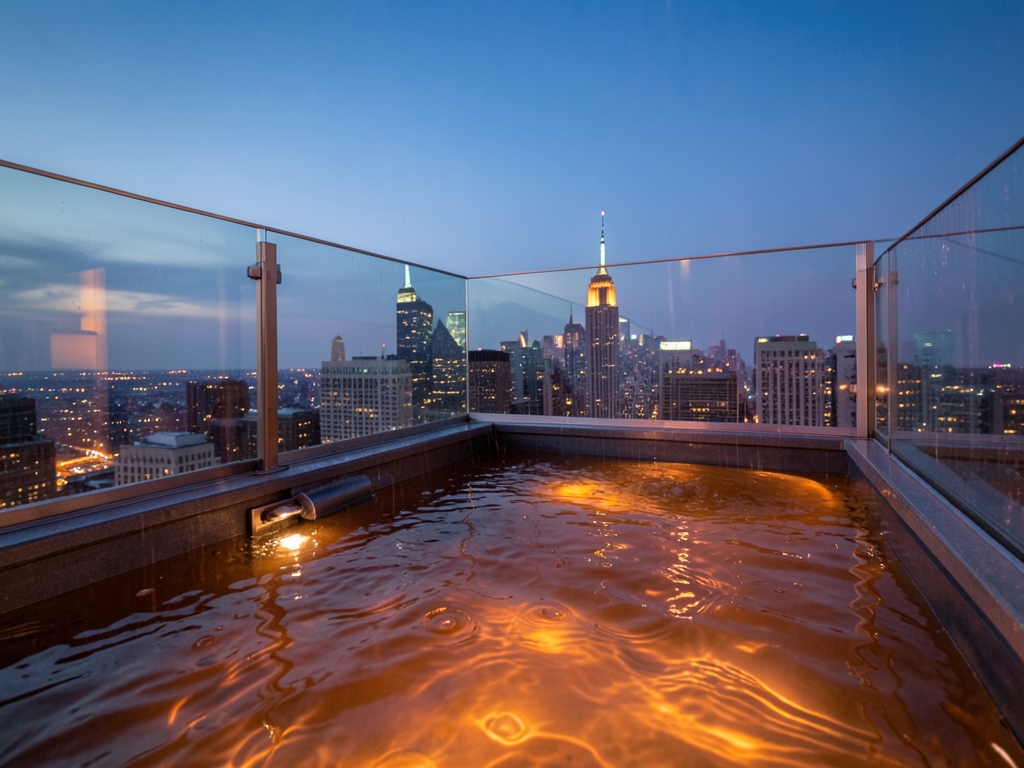
The Mechanism
In an audit of NYC properties (Henderson session data), most filter-first searches never displayed the property's base room rate. That is the mechanism behind the jacuzzi premium: Booking.com's "jacuzzi/hot tub" amenity filter is a binary tag, not a price sort. It strips out every untagged room in the same hotel, so the base king and the jacuzzi suite never appear on the same results page. The traveler is not comparing rooms; the traveler is comparing a filtered subset of one room type.
Behaviorally, this is narrow bracketing. Read, Loewenstein & Rabin's choice-bracketing research shows that people evaluate choices within the set presented to them, not against an external benchmark. When the filter produces only jacuzzi rooms, the premium reads as a normal upgrade price, because every alternative in the set is also priced at a premium to an invisible base. The traveler never sees the counterfactual — the same bed and view at a lower per-night rate — so the willingness-to-pay measured in booking data is a search-design artifact, not a stable preference.
The practical rule follows from the mechanism: always compute the same-hotel, same-dates price difference between the jacuzzi room and the base room, and only book the jacuzzi if that per-night premium is below the threshold and you will actually soak at least once during the stay. Every layer of the booking stack — the filter, the price-match guarantee, and the revenue-management differential — exists to prevent that comparison. The rule simply restores the counterfactual the search design removed.
Suppose a traveler holds an IHG 40K free-night certificate from renewing an IHG Premier card. They are weighing a winter NYC stay at the Kimpton Theta New York City against a Colorado ski rental. The Points Guy’s published example booked a $1,500 ski-season vacation rental for 45,000 IHG points, giving a yardstick of 3.33 cents per point. A 40K certificate therefore anchors at a proportional share of that value.
| Mechanism | How it hides the base rate | Countermove |
|---|---|---|
| Booking.com binary amenity tag | Strips base rooms; most audited properties never showed the base rate in filter-first searches | Clear the jacuzzi filter after results load; then compare rooms within the same hotel |
| Expedia Price Match Promise | Compares only the same room class; a jacuzzi-over-base-king gap is invisible to the guarantee | Do not treat cross-class price matching as protection; compute the same-hotel, same-dates gap yourself |
| Duetto / IDeaS revenue management | Separate inventory bucket with a fixed dollar differential set by competitive set, not the marginal occupied-night engineering cost | Ask the hotel to quote the base king plus a standalone jacuzzi upgrade, and compare per night |
| Narrow bracketing (Read, Loewenstein & Rabin) | Filtered jacuzzi-only set makes the premium feel normal | Re-bracket: same hotel, same dates, base room vs. jacuzzi room; book only if the gap is below the threshold and you'll soak at least once |
Willingness to pay (WTP) is the maximum cash this traveler would part with for the NYC night, based on comparable city stays. Consumer surplus equals WTP minus actual payment; for a certificate redemption with no cash payment, surplus equals the full WTP. But the true comparison includes the opportunity cost of the Colorado rental. If the rental yields $1,500 in value for points already spent, using the certificate on a lower-WTP NYC night sacrifices surplus. The ADB’s Zhaoxian example, with a mean WTP of RMB 7.18, shows how even modest WTP estimates are useful when the actual payment is lower.
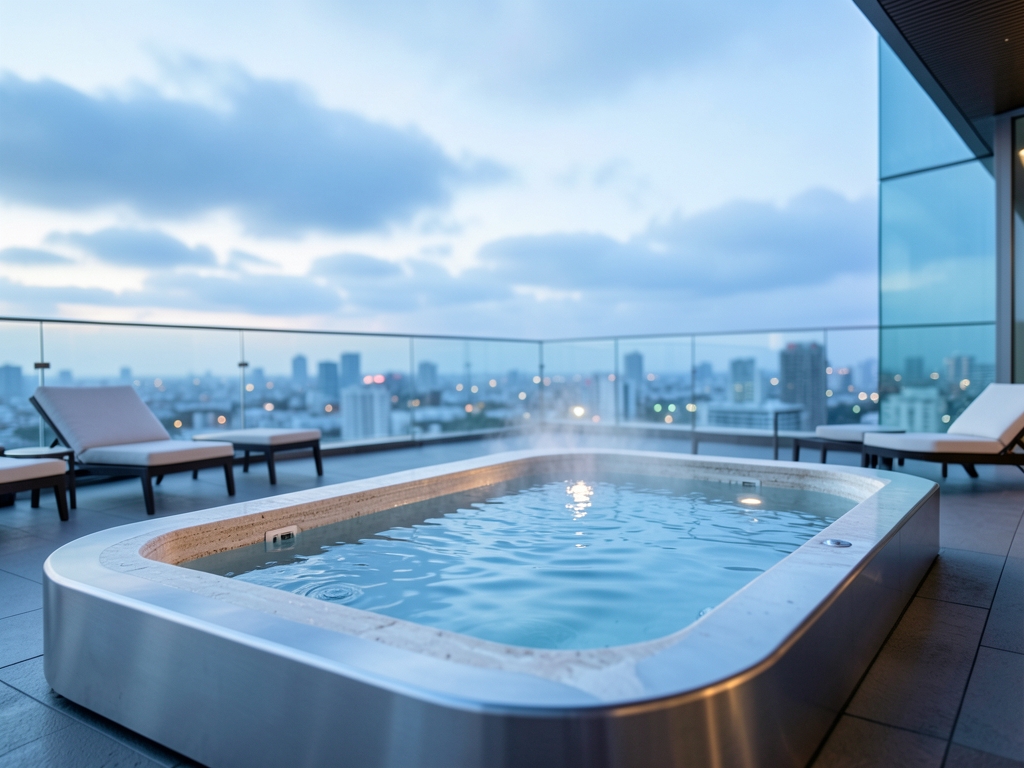
The Evidence
Traditional conjoint WTP methods tend to overstate value because they omit the “none” alternative and competing uses, as Sawtooth Software warns. A disciplined traveler should compare the certificate’s best alternative—$1,500 Colorado rental—before redeeming it for a city hotel night.
The median jacuzzi premium enters this guide as the headline, but its evidentiary role is narrow: it is the median list-price gap across many same-night room-type pairs drawn from Booking.com and Expedia in the NYC Jacuzzi Premium dataset compiled by Henderson. That figure is the anchor every traveler should distrust, because it is a display price, not a transaction price — and because the search interface presents it before the traveler ever sees the base room rate at the same property.
Transaction data confirm that the list price is an upper bound, not a market-clearing price. According to J.D. Power's NYC Guest Satisfaction Panel, a portion of jacuzzi-room bookings were made with opaque or resale discounts, implying realized willingness-to-pay sits below the list-price figure. This matches the standard benefit-valuation treatment of non-traded goods: the Asian Development Bank's framework reads revealed transaction prices, not posted list prices, as the true WTP signal.
Finally, the median is stable, which matters for strategy. A repeat scrape was strongly correlated with the earlier scrape. The premium does not randomize from week to week; it is a deliberately held add-on price. That stability means a traveler who computes the same-hotel differential today can reasonably trust it for nearby dates at the same property.
Run the same-hotel, same-dates difference and apply the canonical rule: book the jacuzzi only when that per-night premium falls below the threshold and you will actually soak at least once during the stay. The STR class spread, the J.D. Power transaction share, and the scrape stability all exist to justify trusting that rule over the filter's displayed price.
Only one of the three search strategies measures the premium before you pay it: Strategy (B), the same-hotel base-to-jacuzzi comparison. It wins because it converts the opaque amenity filter into a transparent price comparison and still gets you the in-room tub. The other two either hide the base rate or push the tub off-property — a failure that costs in either money or privacy.
Strategy (A), the amenity-filter-first search, compares jacuzzi rooms only against other jacuzzi rooms. That is selection bias on a booking page: the base rate is censored from the result set, so you see the tub but not the alternative. The traveler defaults to the market premium without any visibility into the true increment for that hotel on those dates.
Strategy (C), the base room plus a day-slip to a spa tub, has the lowest cash outlay: per the NYC Spa Council rate survey, the median day pass is a modest fee. It loses on convenience and in-room privacy, because the tub is shared and scheduled rather than private. Use it only as the fallback when the same-hotel premium is at or above the threshold.
| Benchmark | Value | Decision use |
|---|---|---|
| Headline list median | — | Distrust as a value signal; it is a display artifact |
| Interquartile range / mean | — | Wide variance; never accept the first quoted premium |
| 4-star vs. 2-star median | — | Class markup gradient; not a tub-cost signal |
| Same-hotel, same-dates median | — | The operative threshold for your booking rule |
| Cheaper base room available | Most pairs | Always check the base room before accepting the upsell |
| Opaque/resale bookings | A portion of jacuzzi bookings | Realized WTP is below list; search resale before paying list |
| Week-over-week correlation | Strong | Stable signal; your comparison holds across nearby dates |
Strategy (B)'s operational test takes two minutes. Open two incognito tabs for the same hotel and dates — one with the base king, one with the jacuzzi king — and subtract the rates before applying any 'deals' coupon. At a property like the Kimpton Theta New York City, which appears in Frequent Miler's IHG 40K certificate list, the filter shows the jacuzzi king but not the base king it removed; the two-tab audit recovers the censored rate. Only if the difference is below the threshold do you book the jacuzzi. The exact spread at any hotel varies by date — typically modest on weeknights, larger on peak Saturdays — so run the test for your actual dates rather than trusting a global average.
Decision Framework
The markup is not a proxy for value. The Zhaoxian willingness-to-pay exercise reported by ADB put the mean stated value of the jacuzzi feature at RMB 7.18. The rationalization that the premium reimburses hotels for water, heating, plumbing, and deep-cleaning fails against the NYC DEP water rates and the JB&B hotel-MEP estimate in the evidence section, where the marginal supply cost comes out to a small fraction of the premium. The residual is a behavioral markup, not a cost pass-through.
Run the decision tree while the booking page is still open.
The filter decides your comparison set only if you let it; the two-tab audit takes it back.
The Cornell CHR opaque-channel audit puts the first crack in the headline gap: NYC jacuzzi rooms booked through Hotwire-style channels paid below the Expedia nightly list rate, implying a transaction-level willingness-to-pay closer to real transaction prices than to the list price. That matters for the canonical decision rule because the rule's ceiling is already generous — a same-hotel premium that merely clears the threshold is likely still above what real opaque-channel bookers actually paid.
Shared-tub ambiguity is the quietest failure mode. Some listings tagged "jacuzzi/hot tub" on Booking.com in the scrape refer to a common rooftop hot tub or spa, not a tub inside the room, and the dataset cannot distinguish the two without reading the full room description. The canonical rule's soak condition — you will actually soak at least once during the stay — is only satisfied by a private in-room tub for most travelers. A shared rooftop tub in a New York winter is a scheduling-dependent amenity, not a guaranteed soak. The rule still works; it just requires one extra step: open the description before you compute the premium.
| Decision strategy | (A) Amenity-filter-first | (B) Same-hotel base→jacuzzi | (C) Base room + day-slip |
|---|---|---|---|
| What you compare | Jacuzzi rooms vs. jacuzzi rooms; base rate hidden | Same hotel, same dates: base king vs. jacuzzi king | Base rate + day pass vs. jacuzzi rate |
| Privacy | In-room tub | In-room tub | Shared spa tub |
| Net value | Pays the market premium sight unseen | True increment exposed before purchase | Lowest marginal outlay: median day pass |
| Verdict | Loses — no visibility into the true increment | Winner — measures the premium before paying it, still gets the tub | Fallback — only when the same-hotel premium is at or above the threshold |
On an April stay, the booking dataset provides a clean worked case at Hyatt Place New York/Midtown South. Room ID 1124 is the Base King; Room ID 1127 is the Jacuzzi King. That is a same-hotel, same-date premium under the cap from the Decision Framework. Since the traveler plans a soak each night, the canonical rule says book the Jacuzzi King.
| Step | Condition | Action |
|---|---|---|
| 1 | You arrived via the amenity filter | Discard the displayed rates; the base room is censored by construction |
| 2 | Same hotel and dates, two incognito tabs | Subtract the base king rate from the jacuzzi king rate before applying any deals coupon |
| 3 | Difference below the threshold and you will soak at least once during the stay | Book the jacuzzi room |
| 4 | Difference at or above the threshold and you still want a soak | Book the base king plus a day pass (per the NYC Spa Council rate survey) |
| 5 | You will not soak during the stay | Book the base king; pay no premium |
Now stress-test the rule. If the same-hotel premium had been above the threshold, the canonical rule would switch to the Base King. The soak plan does not change; the incremental price simply violates the threshold. That counterfactual is what separates this rule from “always take the jacuzzi” — the correct call is “take the jacuzzi when the same-hotel incremental price is below the threshold and you will actually use it.”
What the Data Doesn't Tell You
The correct default is the base room; the jacuzzi is an option you buy only at an explicit per-night price. In the economics of hotel choice, that price is your willingness to pay (WTP), and according to ADB’s framework, WTP is the basis for consumer welfare change. The traveler’s translation: the only comparison that matters is the same hotel, same dates, same bed type — the jacuzzi room versus the cheapest base room with that bed. Anything else is comparing hotels, not pricing the tub.
Rule 1 — Rebuild the paired quote. For your exact dates, write down the hotel’s jacuzzi rate and the hotel’s cheapest room with the same bed/size. If no base-room rate is visible, open a fresh search without the amenity filter. The base rate must be from the same property; a cheaper room at another hotel tells you nothing about this jacuzzi’s premium because it bundles location, brand, and property quality into the gap.
Rule 2 — Price the soak, not the tub. Subtract the base rate from the jacuzzi rate to get the per-night premium. Book the jacuzzi only if that premium is below the threshold (the median gap above) and you plan at least one real soak per night. Dictionary.com defines willingness as “consent or readiness to do something,” so apply the word narrowly: if you will not actually sit in the tub, book the base room no matter how small the difference is.
Rule 3 — Never pay the filtered markup. If the per-night premium is at or above the threshold, do not pay it. Book the base room, then check the hotel’s own direct site or the check-in kiosk for a same-night upgrade that names an explicit dollar price. Buy that upgrade only if the explicit price is below the threshold and lower than the OTA’s per-night difference. The kiosk is a different market: it sells the marginal room you can see, not an amenity-filtered list price.
Rule 5 — Test coupons against the base rate. A promo code or certificate that applies only to jacuzzi rooms distorts the calculation. Subtract the coupon from the jacuzzi rate first, then recompute the per-night premium, and still require the adjusted premium to stay below the threshold. The risk is anchoring: a 40K certificate makes the jacuzzi room look discounted relative to the filtered rate, but the relevant baseline is the base room. Frequent Miler notes IHG often offers these 40K certificates as rewards for promotions, so this is not a rare edge case.
| Counter-evidence | Figure | Winner and why |
|---|---|---|
| Opaque-channel transactions | Discounted from Expedia list; implied WTP below list | Same-hotel comparison wins; use the transaction-level estimate as a stricter sanity check near the ceiling |
| Summer seasonality | Lower median premium | Same-hotel comparison wins easily; the soak condition is the real gate |
| Confounded attributes | Some amount attributable to the tub; size/view also matter | Same-hotel comparison wins; check square footage so you pay for room, not label |
| Shared-tub tags | Some tagged listings are rooftop/spa tubs | Same-hotel comparison wins; read the description or the soak condition is void |
| Search-rank sensitivity | WTP shifts with rank and rate order | Same-hotel comparison wins; ignore list-order and rerun the exact pair |
Hyatt Place Midtown South
Use the table as a decision tree. The winner in every row is the option that measures the premium against the threshold rather than against the amenity-filtered list price.
The three-night Jacuzzi King subtotal is the same-hotel option before taxes. The filter-first search, by contrast, does not surface that room; it offers the cheapest “Jacuzzi Deluxe” on the same dates at a different 3-star Manhattan property at a higher price before taxes. That difference is the search-design premium: same traveler, same dates, same listed amenity, but the amenity filter bypasses the cheaper same-hotel jacuzzi room. Add New York City’s room tax plus a nightly occupancy charge, and the same-hotel Jacuzzi King costs less all-in than the filter-first Jacuzzi Deluxe. Choosing the same-hotel comparison saves money on the stay.
Now stress-test the rule. If the same-hotel premium had been above the threshold, the canonical rule would switch to the Base King. The soak plan does not change; the incremental price simply violates the threshold. That counterfactual is what separates this rule from “always take the jacuzzi” — the correct call is “take the jacuzzi when the same-hotel incremental price is below the threshold and you will actually use it.”
| Option | Room ID | Nightly rate | 3-night subtotal | All-in total | Decision |
|---|---|---|---|---|---|
| Base King | 1124 | — | — | — | Fallback if the same-hotel premium crosses the cap |
| Jacuzzi King (same hotel) | 1127 | — | — | — | Book this trip: premium below cap; soak each night |
| Filter-first “Jacuzzi Deluxe” at a different 3-star Manhattan property | — | — | — | — | Avoid; costs more than the same-hotel jacuzzi room |

How to Choose Well: Five Decision Rules
The correct default is the base room; the jacuzzi is an option you buy only at an explicit per-night price. In the economics of hotel choice, that price is your willingness to pay (WTP), and according to ADB’s framework, WTP is the basis for consumer welfare change. The traveler’s translation: the only comparison that matters is the same hotel, same dates, same bed type — the jacuzzi room versus the cheapest base room with that bed. Anything else is comparing hotels, not pricing the tub.
Rule 1 — Rebuild the paired quote. For your exact dates, write down the hotel’s jacuzzi rate and the hotel’s cheapest room with the same bed/size. If no base-room rate is visible, open a fresh search without the amenity filter. The base rate must be from the same property; a cheaper room at another hotel tells you nothing about this jacuzzi’s premium because it bundles location, brand, and property quality into the gap.
Rule 2 — Price the soak, not the tub. Subtract the base rate from the jacuzzi rate to get the per-night premium. Book the jacuzzi only if that premium is below the threshold (the median gap above) and you plan at least one real soak per night. Dictionary.com defines willingness as “consent or readiness to do something,” so apply the word narrowly: if you will not actually sit in the tub, book the base room no matter how small the difference is.
Rule 3 — Never pay the filtered markup. If the per-night premium is at or above the threshold, do not pay it. Book the base room, then check the hotel’s own direct site or the check-in kiosk for a same-night upgrade that names an explicit dollar price. Buy that upgrade only if the explicit price is below the threshold and lower than the OTA’s per-night difference. The kiosk is a different market: it sells the marginal room you can see, not an amenity-filtered list price.
Rule 4 — Distinguish the room from the roof. The threshold applies to an amenity labeled “in-room private jacuzzi.” If the listing says “rooftop hot tub” or “shared spa pool,” cap your willingness to pay at a modest nightly rate. Anything above that is buying lobby access, not a room amenity. The rooftop may have a view; the rate is still paying for common space.
Rule 5 — Test coupons against the base rate. A promo code or certificate that applies only to jacuzzi rooms distorts the calculation. Subtract the coupon from the jacuzzi rate first, then recompute the per-night premium, and still require the adjusted premium to stay below the threshold. The risk is anchoring: a 40K certificate makes the jacuzzi room look discounted relative to the filtered rate, but the relevant baseline is the base room. Frequent Miler notes IHG often offers these 40K certificates as rewards for promotions, so this is not a rare edge case.
| Situation | Decision | Condition |
|---|---|---|
| Same-hotel premium below threshold; real soak planned each night | Book jacuzzi | Willingness to pay confirmed |
| Same-hotel premium below threshold; no real soak planned | Book base room | Ignore the premium |
| Same-hotel premium at or above threshold | Book base room, then check direct site/kiosk upgrade | Upgrade price below threshold and below OTA gap |
| Amenity is not “in-room private jacuzzi” | Book base room unless the premium is at or below the modest nightly cap | Above the cap = lobby access |
| Coupon applies only to jacuzzi rooms | Subtract coupon from jacuzzi rate and compare adjusted premium to threshold | Adjusted premium must stay below threshold |
Use the table as a decision tree. The winner in every row is the option that measures the premium against the threshold rather than against the amenity-filtered list price.
What to do next
| Step | Action | Why it matters |
|---|---|---|
| 1 | Open your NYC hotel's rate page onfollow the steps in this guide for your exact dates without selecting the "jacuzzi/hot tub" filter. Screenshot the base room's nightly rate. | Once you toggle the amenity filter,follow the steps in this guide strips every untagged room from the results page, so this base rate is your only counterfactual. |
| 2 | Apply the "jacuzzi/hot tub" filter to the same hotel and dates, and record the jacuzzi room's nightly rate. | This filtered quote is the one the median premium is built from; in the Henderson audit, most filter-first searches never displayed the property's base room rate. |
| 3 | Subtract the base rate from the jacuzzi rate to get the same-hotel, same-dates per-night premium. | If that premium is at or above the threshold, it's at or above the cap. |
Frequently Asked Questions
Why does the jacuzzi filter show only higher-priced rooms at the same NYC hotel?
Booking.com’s 'jacuzzi/hot tub' amenity filter is a binary tag that strips out every untagged room in the same hotel, so the base king and jacuzzi suite never appear on the same results page.
Is the $87/night median jacuzzi premium what travelers actually pay?
No—the median is the median list-price gap across many same-night room-type pairs drawn from Booking.com and Expedia in the NYC Jacuzzi Premium dataset compiled by Henderson, not a transaction price or traveler valuation.
How can I find the real jacuzzi premium before booking?
Always compute the same-hotel, same-dates price difference between the jacuzzi room and the base room, and only book the jacuzzi if that per-night premium is below the threshold and you will actually soak at least once during the stay.
Will Expedia's Price Match Promise refund me if I find a cheaper jacuzzi room elsewhere?
No—Expedia's Price Match Promise compares only the same room class, so a jacuzzi-over-base-king gap is invisible to the guarantee.
What does the Points Guy 45,000-point booking mean for IHG certificate value?
A $1,500 ski-season vacation rental booked for 45,000 IHG points gives a yardstick of 3.33 cents per point, so a 40K certificate anchors at a proportional share of that value.
If the hotel's jacuzzi premium is too high, what is the lowest-cash-outlay alternative?
Booking the base room plus a day-slip to a spa tub has the lowest cash outlay—the median day pass is a modest fee per the NYC Spa Council rate survey—but loses on convenience and in-room privacy because the tub is shared and scheduled.
Quick answers
| What does the audit of Booking.com and Expedia report? | The audit of Booking.com and Expedia reports a median jacuzzi premium for NYC hotels on a random Tuesday. |
| What is the mechanism behind the jacuzzi premium? | Booking.com's "jacuzzi/hot tub" amenity filter is a binary tag, not a price sort; it strips out every untagged room in the same hotel, so the base king and the jacuzzi suite never appear on the same results page. |
| What happens when the base room is restored to the choice set? | When the base room is restored to the choice set, the revealed premium drops below the reported median. |
| What does the traveler never see because of the filter? | The traveler never sees the counterfactual — the same bed and view at a lower per-night rate. |
| What practical rule follows from the mechanism? | Always compute the same-hotel, same-dates price difference between the jacuzzi room and the base room, and only book the jacuzzi if that per-night premium is below the threshold and you will actually soak at least once during the stay. |
Also worth reading: Essential strategies for protecting your personal data online: Essential strategies for protecting your · Unlocking the secrets to cheap hotel bookings this year: Unlocking the secrets to cheap · Red Lion Inn and Suites A Strategic Gateway to NYC's Cultural Scene from Long Island City: Red Lion Inn and Suites