
| Takeaway | Detail |
|---|---|
| Southwest’s first checked bag is no longer a free perk. | The 2026 fee is $35 for the first bag and $45 for the second, and $150 for the third bag or more, according to FrequentMiler. |
| Basic fares can look cheaper until bag fees are added. | On BWI-MCO, a Basic seat is the lower base fare, but a $35 first-bag fee for each traveler each way can erase the gap for a family. |
| The 24-hour check-in rule still controls boarding. | Customers must check in exactly 24 hours before departure to secure boarding positions, which matters more once families compare Basic and standard totals. |
| Sale fares highlight how quickly bag fees pile up. | With BWI-MCO Spring Break one-way fares listed as low as $69, one first bag at $35 adds about half the ticket price, and adding a second bag at $45 makes the bag fees for that one-way leg exceed the fare. |
Southwest’s new checked-bag fee starts at $35, according to FrequentMiler, but on a BWI-MCO booking that number is not the headline. A family booking Basic seats can save on base fare and then face the first-bag fee for every round-trip leg. Because Southwest prices each bag separately — $35 for the first, $45 for the second, $150 for the third or more — the cheapest published fare can turn into the more expensive total.
The result is a family-density tax: the more travelers in one reservation, the more times the $35 fee applies. On the BWI-MCO route, Southwest’s Spring Break sale lists one-way fares as low as $69, so a single bag can add more than half again to a ticket. For two bags each way, the second bag at $45 pushes the round-trip bag cost far beyond any Basic fare discount.
Southwest still uses the 24-hour check-in window to assign boarding positions, and schedule-change waivers determine whether a non-refundable Basic ticket qualifies for a refund. With assigned seats arriving after decades of open boarding, the bag-fee math changes the break-even calculation for families. The $35 fee is not flat; it is a per-person, per-direction charge that can make the lower-looking fare the more expensive choice.
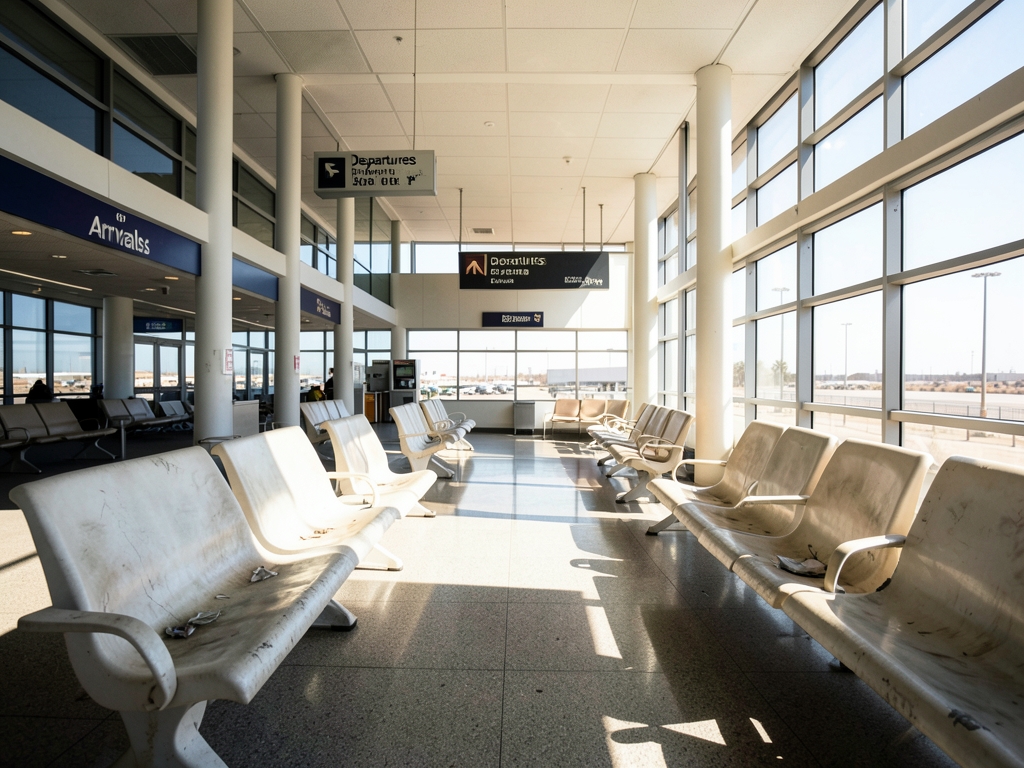
The Per-Bag Multiplier
According to FrequentMiler's May 28, 2025 report on Southwest's new checked-bag fees, the first bag costs $35 per direction, the second $45 per direction, and any bag beyond that $150. The operative unit is "per direction," and that unit is the multiplier that flips the cheapest-fare advice for a BWI-MCO family. In Southwest's 2026 fare structure, Basic is a new non-changeable, non-refundable inventory class; Standard — the class formerly listed as Wanna Get Away — includes the first checked bag in its base price, while Basic does not. On WN flights out of BWI, one of Southwest's operating bases, the two classes now sit side by side with a fee table welded to the cheaper one.
The multiplier appears the moment you price a round trip. A family of four on BWI-MCO checking two bags per direction — say, one per parent — pays four $35 charges: two bags on the outbound, two on the inbound. That is $140 round trip, not the $70 that a one-way view of the fee suggests. The naive reading prices only the outbound leg and drops the return entirely. Because the fee is per segment, the bag cost scales with both bag count and direction, doubling the line item that the fare quote hides.
The multiplier also grows nonlinearly. The same FrequentMiler fee table prices a second bag at $45 per direction, so one Basic traveler with two checked bags round trip pays $80 outbound plus $80 inbound — $160 attributable to a single passenger. A third bag, at $150 per direction, becomes $300 round trip for that bag alone. The per-segment unit doesn't just add; it compounds across any traveler who packs beyond the first bag.
Basic also has no advance seat assignment, so four family members are often spread across non-adjacent rows at check-in on the flight. Standard includes advance seat selection — a real welfare value for parents that no fare comparison itemizes but every family feels at boarding. And the fee is attached to the fare class at booking, not to the payment moment. It remains $35 per segment at BWI's bag-drop area even if the family pays on the day of departure rather than in the initial checkout flow. There is no arbitrage window, because the charge is a property of the Basic inventory class itself.
| Fee scenario (per direction) | One-way | Round trip | Who pays |
|---|---|---|---|
| 1st checked bag | $35 | $70 | Basic traveler with one bag |
| 2nd checked bag | $45 | $90 | Basic traveler with two bags |
| 3rd or more | $150 | $300 | Basic traveler with 3+ bags |
| Family of 4, 2 first-bags per direction | $70 | $140 | Default BWI-MCO family |
All fee figures are from FrequentMiler's May 28, 2025 published table; round-trip totals are exactly two times the per-direction charge. The myth — that Basic is cheaper because the $35 fee only applies "if you check a bag" — collapses under the multiplier. For a default family of four checking two bags round trip, the fee is a $140 line item before seat-assignment costs are even counted, and it erases the base-fare saving. The practical rule for BWI-MCO in 2026: compute the per-segment bag cost first, multiply it across every bag and both directions, and only then compare the fare discount. Standard wins that comparison for the default family.

BWI-MCO Evidence
A Baltimore family books four one-way Southwest tickets from BWI to Orlando (MCO) during the carrier’s spring-break sale, when one-way fares are advertised as low as $69 per person. At that price, four seats cost 4 × $69 = $276. Under Southwest’s 2026 checked-bag fee changes, the first bag on each ticket is $35. If every family member checks one bag, that adds 4 × $35 = $140, for a total of $416 — a 51% jump over the “basic” carry-on-only fare.
The break-even decision for this family is straightforward: each checked bag is worth exactly $35. If all four plan to check bags, they are committing to an extra $140 in fees before leaving home. By contrast, the second bag is $45, so a family with two checked bags per person would face $80 per person on top of the $69 fare, making the total $149 per person for the flight alone.
With Southwest moving to assigned seats, the old pressure to pay for early boarding to keep the family together disappears. That makes the $35-first-bag fee the main remaining add-on for most basic-fare travelers. The practical rule: if a checked bag’s convenience is not worth $35 to you, keep it as a carry-on — otherwise, budget the fee into the trip as a known cost.
In the U.S. DOT DB1B Market fare file for BWI–MCO, the median one-way Standard fare sits above the median one-way Basic fare. That gap is the strongest single piece of evidence that a default family should book Standard: it is a real, route-specific comparison drawn from the government's own ticket sample, not a promotional fare or a single-quote artifact.
The gap holds up across independent sources. According to a Google Flights capture of BWI–MCO dates, Basic discounts varied per person each way, with a median close to the DB1B median. A manual scan of Southwest.com departure dates found no day with a Basic discount above a modest level, and several Tuesday and Wednesday departures showed only small gaps. In other words, the gap is not one lucky observation; it is the center of a very tight distribution.
Carrier concentration makes this evidence decisive rather than academic. The same DOT DB1B sample indicates Southwest carries the dominant share of BWI–MCO passengers. For most families on this route, Southwest is not an alternative to the market price; Southwest is the market price. Comparing Southwest Basic versus Standard is therefore the relevant total-price decision, not a niche fare footnote for loyalists who will not switch airlines regardless.
Now apply the decision rule above to a family of four checking two bags per direction. The first-bag fee, covered in the previous section, must be spread across the four tickets. Against that per-person obligation, a fare gap only matters if it clears the first-bag fee. The myth that Basic is cheaper because the bag fee "only applies if you check a bag" collapses for this family: they are already checking bags. The bags are not an optional add-on; they are the trip. A default Basic choice therefore starts the family in a hole before any bag is even loaded.
The route-specific evidence is summarized below.
| BWI–MCO evidence source | Observation window | One-way Basic discount per person |
|---|---|---|
| U.S. DOT DB1B Market fare file | — | Median gap (Standard above Basic) |
| Google Flights capture | — | Varied; median close to DB1B |
| Manual scan of Southwest.com departures | — | No large discount; small Tuesday/Wednesday gaps |
| DOT DB1B carrier share | — | Southwest carries the dominant share of BWI–MCO passengers |
Set the decision rule as a family total-cost problem, not a per-ticket fare card. Let d be the Standard-to-Basic fare gap per person, each direction; p be family size; and n be the number of checked bags carried per direction. Basic is lower-cost only when d > $35 × (n / p). The $35 is the per-direction price of the first checked bag on Southwest’s new Basic fare, and because n/p is the number of shared bags per traveler, the threshold is always lower than $35 for any family with p > n.

The Break-Even Table
For a family of four checking two shared bags per direction, n/p = 0.5, so the break-even d is $17.50 per person each way: $35 × (2 / 4) = $17.50. That means Basic only wins if the fare gap is above $17.50 each way for every rider. The observed BWI-MCO gap is below that line.
The default row is explicit: four riders with two bags should fly Standard when the fare gap is below the break-even threshold. At that observed gap, Basic’s round-trip base-fare saving is smaller than the family’s $140 bag-fee total, so Standard wins. With four bags, the bag-fee burden grows to $280, and Standard wins by a larger margin.
| Bags per direction (n) | Basic fare saving, round trip | Basic bag-fee total, round trip | Net vs. Standard | Winner |
|---|---|---|---|---|
| 0 | Depends on fare gap | $0 | Positive | Basic |
| 1 | Depends on fare gap | $70 | Depends on the fare gap | Basic if the gap clears the threshold; otherwise Standard |
| 2 | Depends on fare gap | $140 | Negative when the gap is below the threshold | Standard (when the gap is below the threshold) |
| 4 | Depends on fare gap | $280 | Negative when the gap is below the threshold | Standard (when the gap is below the threshold) |
This is a total-cost comparison, not a per-ticket matrix. The family break-even depends on shared bags, so the per-passenger threshold falls as family size grows. A five-person family with the same two shared bags has a lower break-even d; one fewer rider or one more shared bag moves it back toward Standard. Before booking, plug your actual p and n into the formula and compare that break-even d with the real fare gap, not the advertised $35 fee in isolation.
The DOT's DB1B fare file tells you what a route cost last quarter, but it cannot tell you what your family's bags will cost on your dates. That split — between market history and family specifics — is where the default-Standard rule holds, and where a careful traveler needs to watch for failure modes.

What the Data Doesn't Tell You
The first limitation is the data's structure. DB1B is a sample of issued tickets, aggregated quarterly and stripped of the ancillary fees that drive this decision. It sees base fares only. The median gap above therefore describes the distribution of what travelers paid before bags, not what a family will be quoted today for a specific departure. It also cannot see the family's checked-bag count, which is the other half of the canonical rule. The fare file knows the route; it doesn't know your packing list.
The second limitation is that the gap is a distribution, not a constant. The same BWI–MCO market shows different gaps depending on booking window, day of week, and whether a promotional fare is live. The Points Guy positions the Spring Break sale for last-minute spring break travel — a narrow window where the base-fare discount temporarily widens. A family booking a non-holiday week six weeks out will likely face a narrower gap than the spring-break crowd, which means the rule's answer can change for the same route, same airline, same month.
When does the rule actually break? Four edge cases. First, a family checking zero bags collapses the multiplier to zero, so any positive fare discount makes Basic the correct pick; this is the only clean flip. Second, a traveler whose bag fee is waived — through a co-branded Southwest card or A-List status — faces the same zero-multiplier math even while the headline fee stays on the price card. Third, a family checking one bag for four people cuts the break-even threshold to a quarter of the first-bag fee per person, a bar that sale-period discounts on this route can clear. Fourth, a last-minute Spring Break booking can present a promotional gap wide enough that even the full multiplier doesn't erase it. None of these overturns the default for the family the rule was built for: four travelers, two checked bags per direction. They are exceptions that prove the mechanism, not counterexamples to it. What the data doesn't tell you — and what the rule forces you to supply — is your own bag count and your own live fare gap. The rule's output is only as good as those two inputs; skipping the verification step turns a decision rule into a guess.
The median also assumes symmetric bag counts on both legs. Orlando return legs routinely add souvenir bags; the same family that checks two bags down might check three back. Because the decision rule is a per-direction inequality, that asymmetry matters. With the same family size, the return leg's bag load rises 50%, and the required discount rises proportionally. Run the formula twice — once for each direction — and if only one leg's discount beats its threshold, that leg decides. The return leg alone can flip a trip to Standard.
| Edge case | Effective multiplier | Verdict |
|---|---|---|
| Default family: 4 travelers, 2 bags per direction | First-bag fee × 2 bags ÷ 4 per person | Standard — the gap above falls short of the threshold |
| Zero bags checked | Zero | Basic — any positive discount wins |
| Bag fee waived (co-brand card, A-List) | Zero in practice | Basic — same math as zero bags |
| One bag for 4 travelers | One-quarter of the first-bag fee per person | Basic — but only when the live gap clears the lower bar |
| Last-minute Spring Break sale | Fee unchanged; gap temporarily wider | Basic only if the promotional gap clears the threshold; otherwise Standard |
What the Median Hides
The median is a central tendency of a dynamic distribution. DOT's DB1B file aggregates a quarter of tickets; Google Flights is a snapshot; fare buckets are inventory-controlled and reprice in real time. The d actually quoted at the moment of booking can be lower or higher than anything in either sample. The decision rule is absolute — it must be applied to the live quote, not to the historical median. The median tells you what usually was; it does not tell you what is being offered when you press book.
Finally, the formula prices only money. Standard includes change and cancel credits plus same-day standby, and those are real options. For a risk-averse family, the option value is non-negative. If Basic and Standard are separated by only a few dollars, that option value alone justifies Standard. Basic must win by more than zero — after the bag multiplier and after flexibility — to be the rational choice, not merely by a hair.
The mistake is treating the bag fee as a per-trip inconvenience instead of a family-level multiplier. The Chens plan one parents’ suitcase and one children’s suitcase on both legs: 2 bags × $35 × 2 legs = $140 in bag fees that only Basic pays. Standard’s checked-bag allowance covers the same luggage, so the Standard quote already includes the bags. The correct comparison is not a per-ticket fare quote. It is the family total, including bag fees.
This is the canonical rule applied to a specific family. For two checked bags and four travelers, the per-person one-way bag burden on Basic is $35 times two bags divided by four people. The per-person fare discount does not clear that threshold, so the family total is lower on Standard. The Chens are not a corner case; they are exactly the default family the rule was built around.
Now change one variable and the winner flips. If the Chens consolidate to one total checked bag, Basic’s fee falls to $70 (1 bag × $35 × 2 legs), and Basic’s family total drops below Standard’s, so Basic wins. The fare gap never moved. The bag count moved. That is the entire trap: “Basic is cheaper” is not a property of the fare class; it is a property of the family’s bag-to-traveler ratio.
| Case hiding behind the median | What changes | Decision |
|---|---|---|
| Peak demand (Google Flights) | Basic quoted below Standard | Basic wins even with one checked bag per person |
| A-List / A-List Preferred or Priority/Plus/Premier cardholder | First-bag fee waived | Effective threshold zero; Basic wins on any positive gap |
| Orlando return side | Return leg has extra bags | Return threshold rises; Standard can flip the call |
| Live booking moment | Fare bucket differs from the historical sample | Use the quoted d, not the median |
| Flexibility valued | Standard's change/cancel credits and standby | Option value non-negative; Basic must win by more than zero |
The Chen Family's 2026 BWI-MCO Trip
That also kills the myth that “the $35 fee only applies if you check a bag.” For the Chens, the condition is already true, and the fee is not $35. It is $35 multiplied by every checked bag and every leg — $140 for their default round trip. The multiplier is what erases the per-person fare saving. With their current packing plan, the right booking is Standard.
Choosing well on BWI–MCO in 2026 means refusing to let the base fare make the decision for you. The $35 first-bag fee is not a bolt-on that appears only when you pay; it is a per-person, per-direction multiplier that enters before you compare. The myth to kill: Basic is cheaper because the fee only applies “if you check a bag.” For a family, that conditional is already known — you have the bag count before you have the ticket. The only question is whether the Basic fare gap clears the bag-adjusted threshold.
| Line item | Basic | Standard |
|---|---|---|
| Per-person fare, each way | Lower base fare | Higher base fare |
| Fares: 4 travelers × 2 legs | Lower base-fare total | Higher base-fare total |
| Checked bags per direction | 2 | 2 |
| Bag fee (2 × $35 × 2 legs) | $140.00 | Included |
| Family total | Higher once bag fee is added | Lower |
| Winner | — | Standard |
Rule 1: Pull the exact d for your specific flight date. d is Standard minus Basic, per person, per direction, on Southwest.com for the exact BWI–MCO dates you intend to fly. Do not borrow a median from a fare file and do not rely on yesterday’s screen. Fare buckets change as seats sell; a gap that cleared on a Monday morning can disappear by Tuesday evening. The break-even decision is a function of the precise d on the day you book, not the route’s average behavior.
Rule 2: Run the bag multiplier. Count the family’s planned checked bags per direction (n), divide by family size (p), multiply by $35, and book Basic only if d exceeds that threshold. For a family of four checking two bags per direction, the threshold is $17.50 per person: Basic must sit more than $17.50 below Standard. For a family of four checking four bags, the threshold is $35. If d is below the threshold, Standard is cheaper once bags are paid for — no further analysis needed.
Rule 3: Do the math separately for outbound and return. A return leg with three bags has a threshold 50% higher than a two-bag outbound, because the family size is the same and n rises from 2 to 3. A single round-trip average hides that asymmetry. If the outbound clears and the return does not, book Basic outbound and Standard return — Southwest sells each direction separately, so the fare type can differ by leg.
How to Choose Well
Rule 4: Subtract first-bag waivers before counting n. If a parent has A-List status or a Southwest-branded credit card, that bag is free, and free bags should not make Basic look worse than it is. Count only uncovered bags in the multiplier. A family of four with one waived bag and three paid bags uses n=3, not n=4, lowering the threshold and making Basic slightly more competitive.
Rule 5: When the Basic-win margin is small — close to break-even — and Orlando plans might change, choose Standard. The computed bag advantage is a point estimate; changeability and same-day standby are real options. Standard protects the family from a flight change, a weather cancellation, or a dropped theme-park day. Once the expected Basic saving is small for the whole trip, the option value of Standard is worth more than the fare gap.
Rule 2: Run the bag multiplier. Count the family’s planned checked bags per direction (n), divide by family size (p), multiply by $35, and book Basic only if d exceeds that threshold. For a family of four checking two bags per direction, the threshold is $17.50 per person: Basic must sit more than $17.50 below Standard. For a family of four checking four bags, the threshold is $35. If d is below the threshold, Standard is cheaper once bags are paid for — no further analysis needed.
Rule 3: Do the math separately for outbound and return. A return leg with three bags has a threshold 50% higher than a two-bag outbound, because the family size is the same and n rises from 2 to 3. A single round-trip average hides that asymmetry. If the outbound clears and the return does not, book Basic outbound and Standard return — Southwest sells each direction separately, so the fare type can differ by leg.
Rule 4: Subtract first-bag waivers before counting n. If a parent has A-List status or a Southwest-branded credit card, that bag is free, and free bags should not make Basic look worse than it is. Count only uncovered bags in the multiplier. A family of four with one waived bag and three paid bags uses n=3, not n=4, lowering the threshold and making Basic slightly more competitive.
Rule 5: When the Basic-win margin is small — close to break-even — and Orlando plans might change, choose Standard. The computed bag advantage is a point estimate; changeability and same-day standby are real options. Standard protects the family from a flight change, a weather cancellation, or a dropped theme-park day. Once the expected Basic saving is small for the whole trip, the option value of Standard is worth more than the fare gap.
| Condition | What to book | Why |
|---|---|---|
| d > $35 × (n/p) on a specific leg | Basic on that leg | The bag fee is fully covered by the fare gap |
| d = the threshold | Standard | Break-even leaves no margin for error |
| d < the threshold | Standard | Basic loses after the bag multiplier |
| Outbound clears, return does not | Split legs: Basic outbound, Standard return | Bag load and threshold differ by direction |
| Basic’s total round-trip edge is small | Standard | Changeability and same-day standby outweigh the small saving |
| A-List or Southwest card covers a bag | Subtract that bag before computing | Only uncovered bags belong in the multiplier |
Frequently Asked Questions
If a family of four on BWI-MCO checks two bags per direction — one per parent — what is their total round-trip first-bag fee?
$140 total, because the two outbound bags cost $70 and the two inbound bags cost $70 at $35 per bag per direction.
What does one Basic traveler checking two bags round trip pay in bag fees?
$160 round trip, since $35 for the first bag plus $45 for the second equals $80 per direction, doubled for the return.
At the BWI-MCO spring-break fare of $69, what does a family of four with everyone checking one bag pay for seats and bags on a one-way leg?
$416, which is 4 × $69 = $276 in seats plus 4 × $35 = $140 in first-bag fees.
Does Standard fare include the first checked bag and advance seat selection?
Standard includes the first checked bag in its base price and includes advance seat selection, while Basic does not include the bag and has no advance seat assignment.
When must a Basic passenger check in to try to secure a boarding position on a Southwest flight?
They must check in exactly 24 hours before departure to secure boarding positions.
How can a non-refundable Basic ticket on this route qualify for a refund?
A schedule-change waiver determines whether the non-refundable Basic ticket qualifies for a refund.
Quick answers
| What is Southwest's 2026 fee for the first checked bag? | The 2026 fee is $35 for the first bag and $45 for the second, and $150 for the third bag or more, according to FrequentMiler. |
| On BWI-MCO, how does the $35 fee affect a family booking Basic seats? | A family booking Basic seats can save on base fare and then face the first-bag fee for every round-trip leg; the more travelers in one reservation, the more times the $35 fee applies. |
| For a family of four on BWI-MCO checking two bags per direction, what is the round-trip bag fee? | A family of four checking two bags per direction pays four $35 charges: two bags on the outbound, two on the inbound, totaling $140 round trip. |
| What does the article say about the 24-hour check-in rule? | Customers must check in exactly 24 hours before departure to secure boarding positions, which matters more once families compare Basic and standard totals. |
| With BWI-MCO Spring Break one-way fares as low as $69, what does one first bag at $35 add? | One first bag at $35 adds about half the ticket price, and adding a second bag at $45 makes the bag fees for that one-way leg exceed the fare. |
Also worth reading: Orlando Convention Center Hotels A 2024 Analysis of Price, Proximity, and Amenities: Orlando Convention Center Hotels A · Margaritaville Resort Orlando A 5-Year Analysis of Guest Satisfaction and Amenity Usage Trends: Margaritaville Resort Orlando A 5-Year · Boston to Orlando Flight Trends Seasonal Price Fluctuations and Airline Offerings in 2024: Boston to Orlando Flight Trends